 EN
EN DE
DE FR
FR ES
ES NL
NL PT
PT JA
JA KO
KO ZH
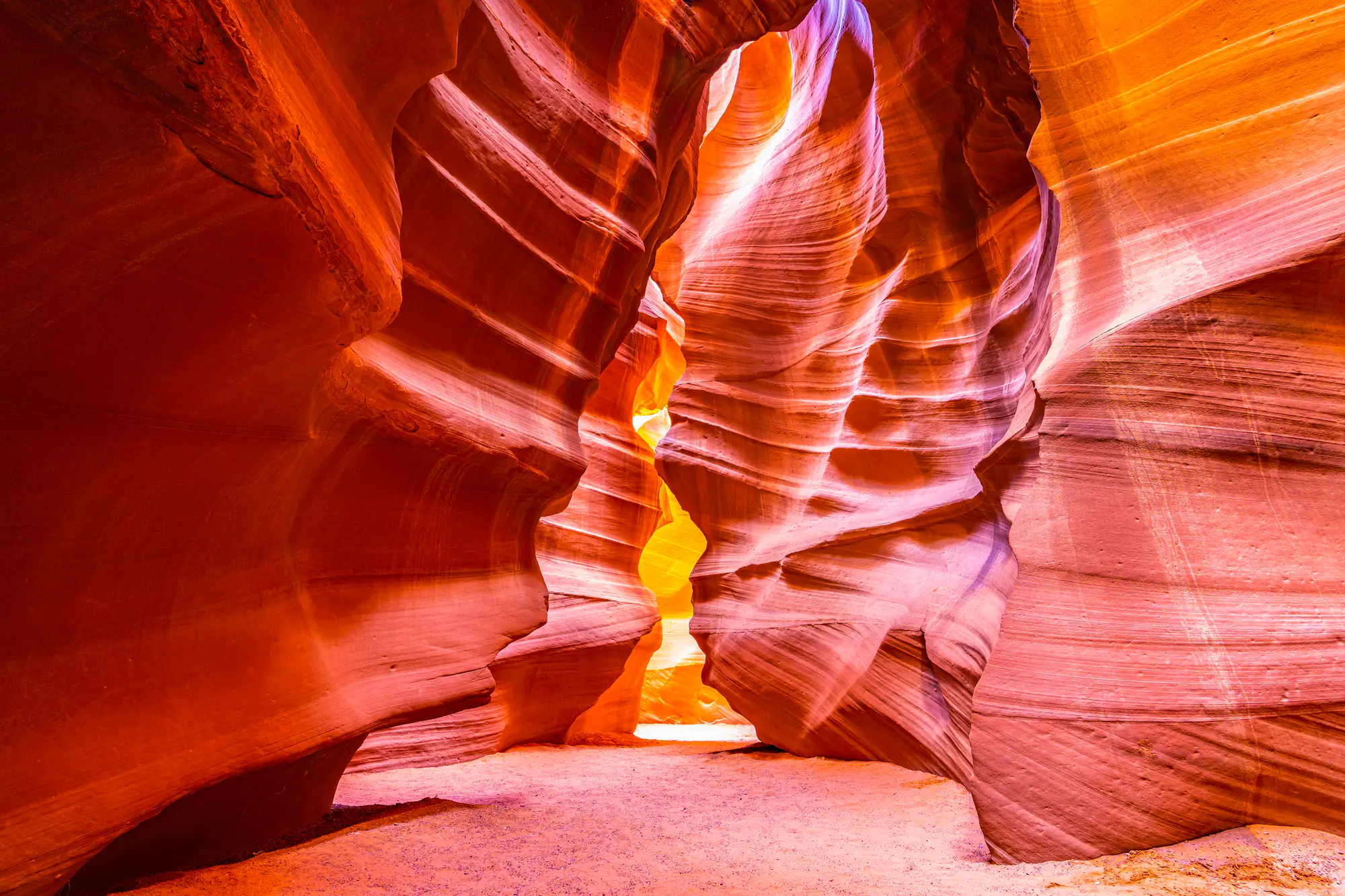
ZHAmong Arizona’s hidden gems, Upper Antelope Canyon, known to the Navajo as Tsé bighánílíní, "the place where water flows through the rocks", is arguably the most photographed slot canyon in the world. Accessible at ground level, it stands out from its neighbors with its wide, winding galleries, where the famous columns of light fall vertically, transforming the suspended dust into almost supernatural golden beams. Its Navajo sandstone walls, polished over millions of years by flash floods and sand-laden winds, shift in hue from ochre to pink to purple as the hours pass. Upper Antelope Canyon offers a visual experience of rare intensity and a magical immersion in a world where rock dances with light.
Location
Upper Antelope Canyon is located just a few miles east of Page, Arizona, on Navajo Nation land.
GPS Coordinates : 36.861892,-111.374326
Visiting conditions
Access to Upper Antelope Canyon is strictly regulated and is available exclusively through guided tours led by Navajo guides certified by the Navajo Nation. As true guardians of this sacred site, these local experts do more than just ensure your safety in the narrow sandstone corridors; they also share their intimate knowledge of the wind and water geology that has sculpted these undulating forms over millions of years, as well as the Navajo spirituality deeply connected to this place. They’ll also reveal the best angles and spots to capture its play of light.
There is an admission fee to visit Upper Antelope Canyon, and the price includes the permit to access Navajo territory. It is strongly recommended that you book your tickets online several weeks, or even months, in advance, especially during peak season (spring through fall). Capacity is strictly limited by Navajo authorities to preserve this exceptional site, and demand far exceeds available supply : time slots often sell out within minutes of booking opening.
The entire tour experience lasts an average of about 90 minutes, including travel time to the slot canyon and the tour itself. The time spent inside the canyon itself is about an hour, giving you plenty of time to soak in the beauty of the surroundings. Depending on the tour operator you choose, the meeting point will be either directly at the agency in the town of Page or along AZ98 (GPS : 36.897006,-111.407833).
Unlike Lower Antelope Canyon, which is easily and quickly accessible on foot, Upper Antelope Canyon requires a 4x4 transfer across the desert : about 3 miles on a red-sand trail that already gives you a taste of the adventure. Don’t worry : this ride is fully included in the tour. All you have to do is hop aboard your Navajo tour operator’s off-road vehicle, and your guide will take care of the rest, driving you right to the canyon’s entrance.
Upper Antelope Canyon stretches for approximately 300 meters. Access is at ground level, and the path to the canyon floor is smooth and sandy, making it accessible to virtually all visitors. This ease of movement allows you to focus fully on what matters most : looking up and soaking in the light that sculpts the Navajo sandstone walls into a succession of hypnotic waves and curves.
Discovering Upper Antelope Canyon
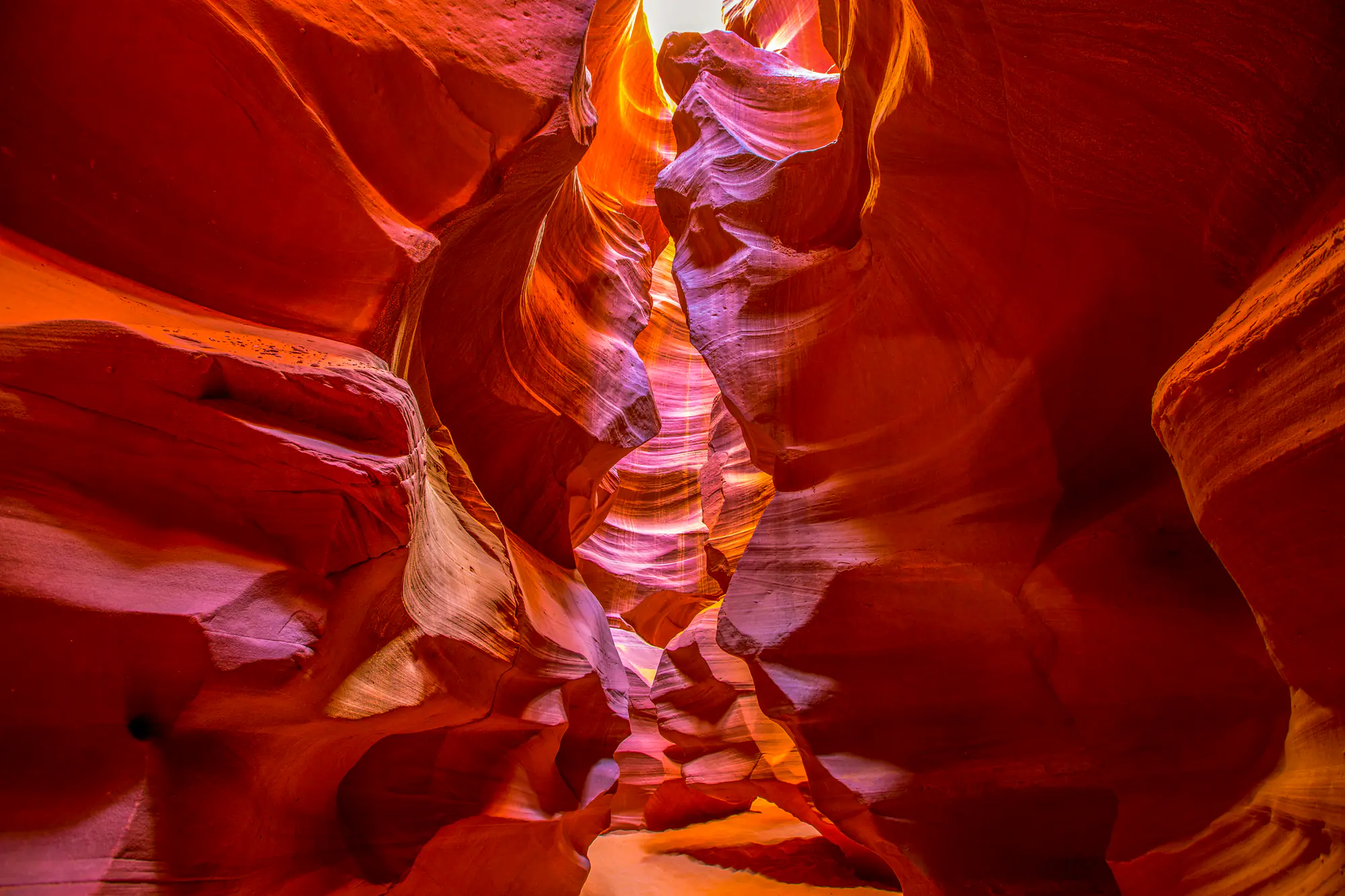
Stepping into Upper Antelope Canyon is like crossing the threshold of a sandstone cathedral that the Navajo people call Tse' bighanilini, "the place where water flows through the rocks". Accessible at ground level, this A-shaped canyon opens up generously to visitors, unlike the more intimate confines of Lower Antelope Canyon or the preserved seclusion of Antelope Canyon X. From the very first steps on the fine sand, the noise of the outside world fades away, replaced by an almost palpable silence, and one immediately understands that this place does not quite belong to the ordinary world.
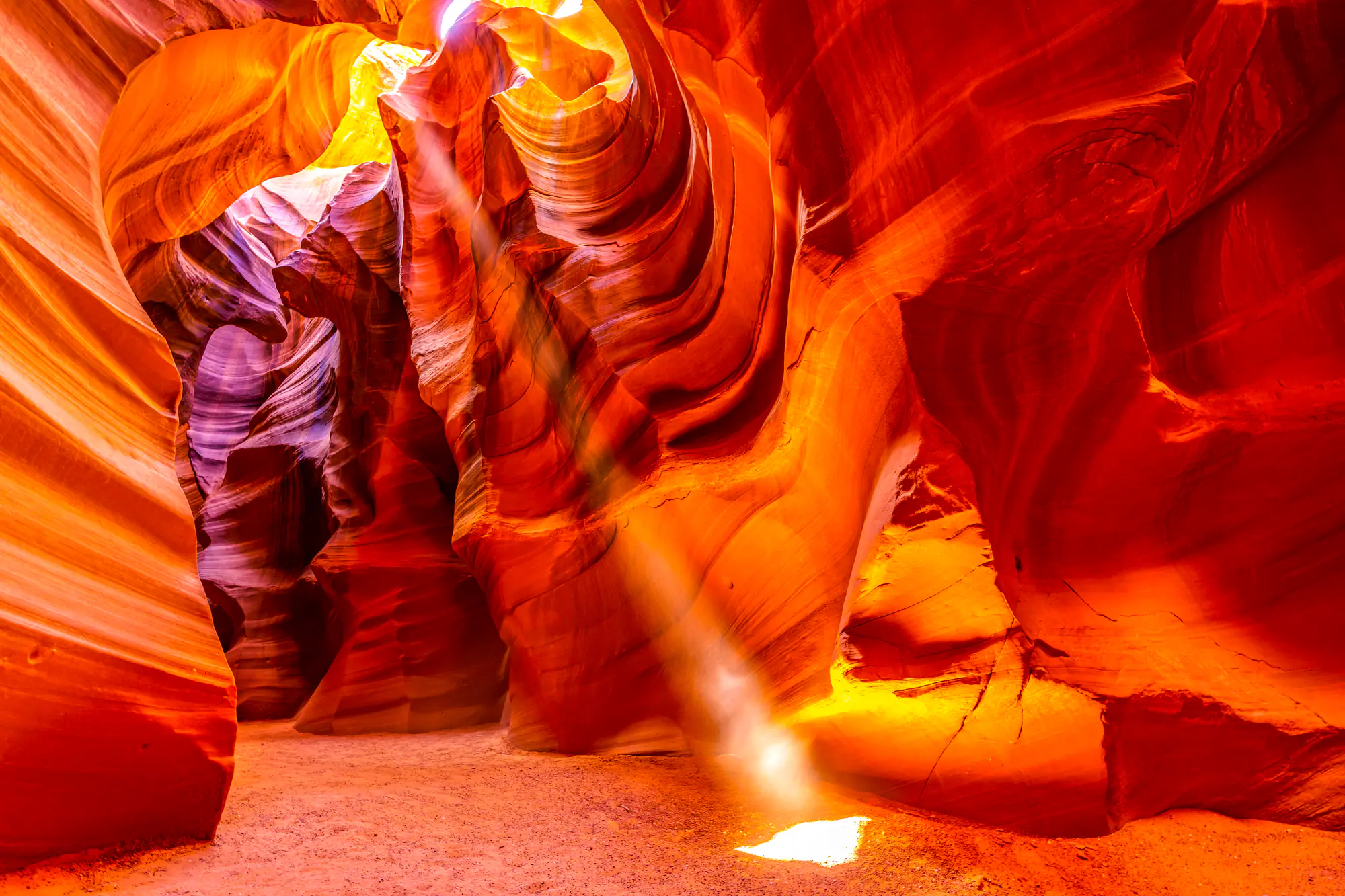
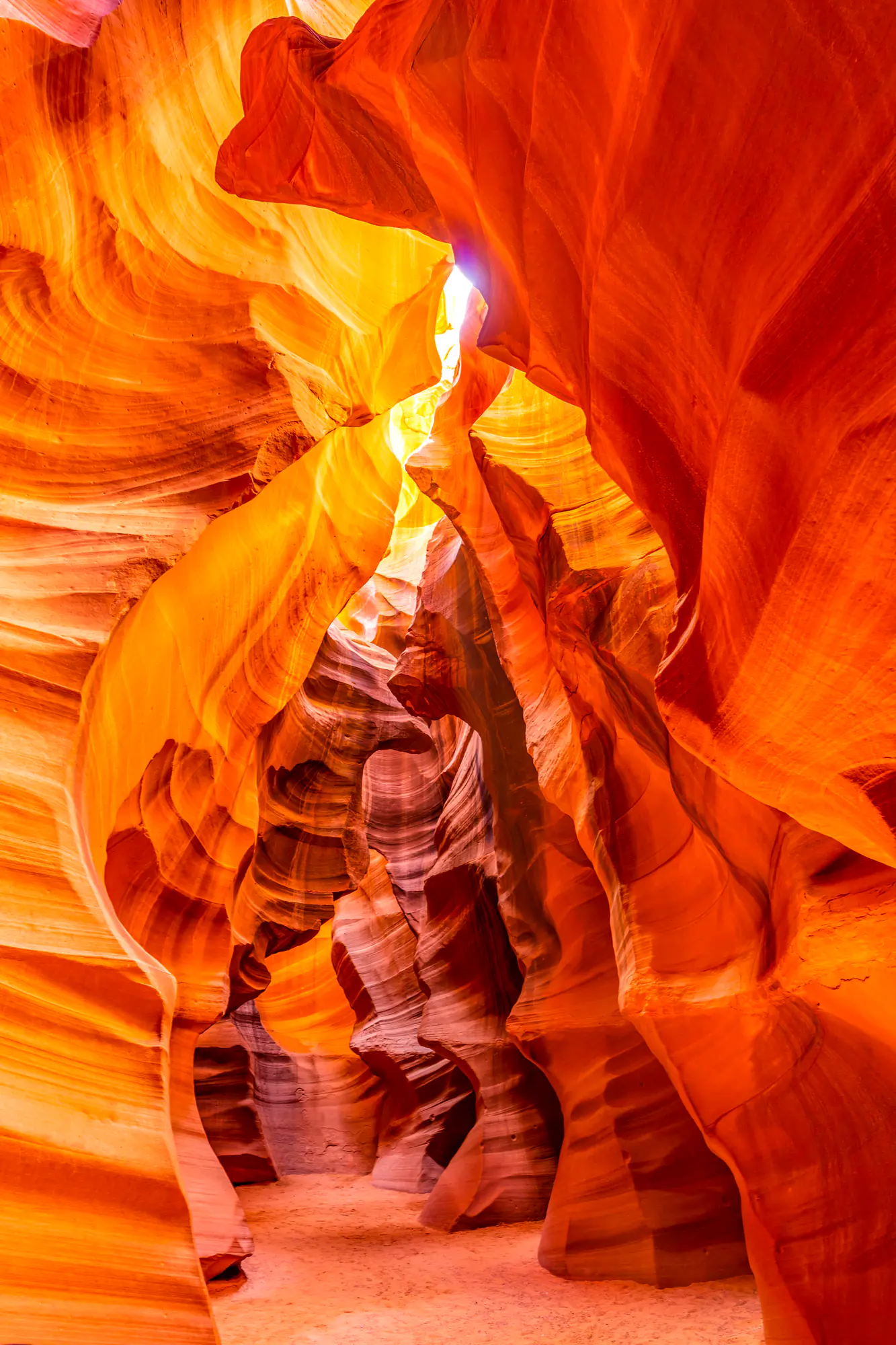
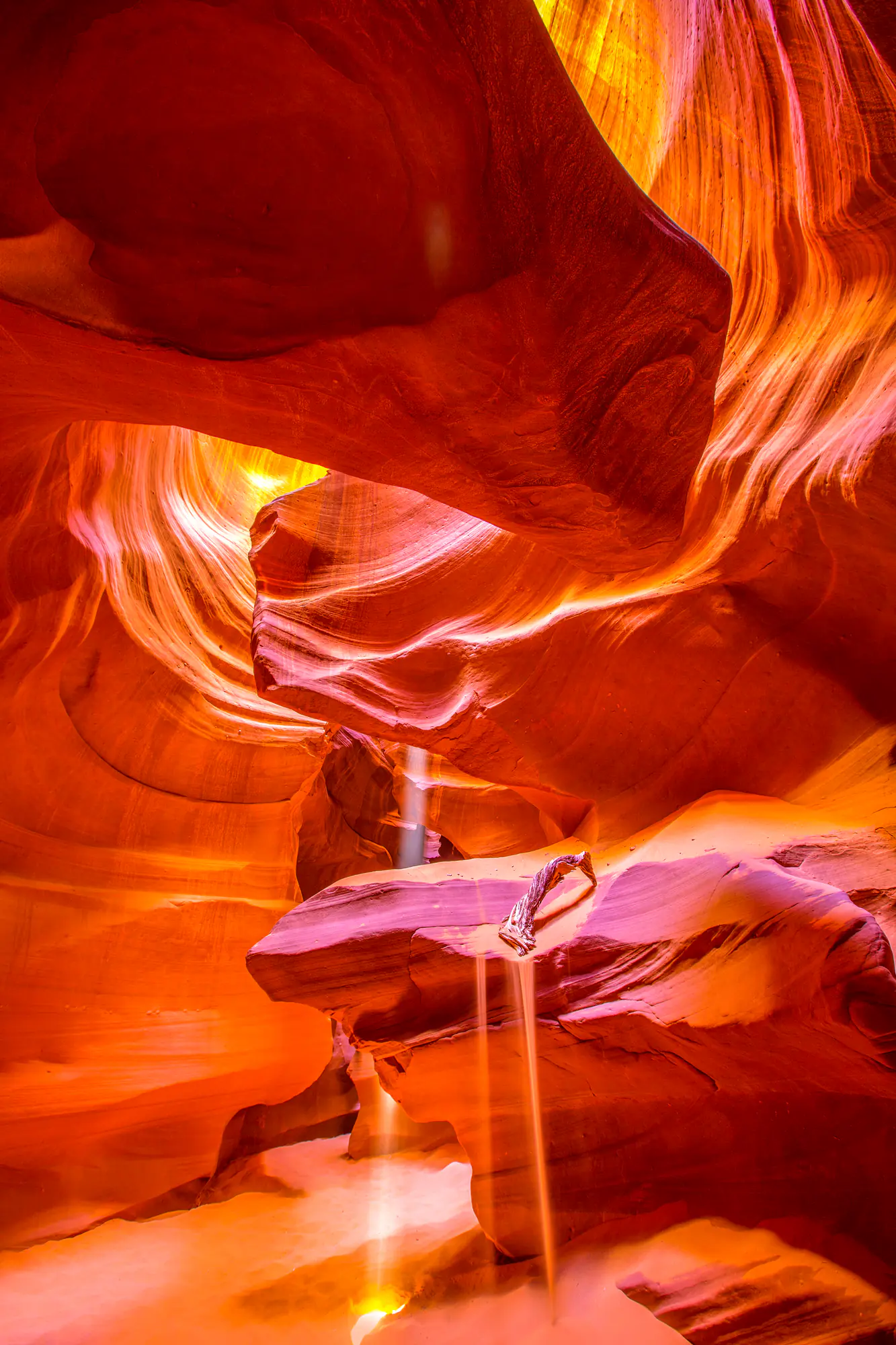
The canyon walls tell millions of years of geological history with silent eloquence. Flash floods and wind have sculpted the Navajo Sandstone into waves of almost unreal fluidity, carving meanders, alcoves, and overhangs of absolute organic grace. The rock, polished as smooth as silk, takes on shapes that evoke at times the folds of crumpled fabric, at other times the swirls of an abstract sculpture : every nook reveals a new composition, every vantage point opens up a fresh perspective on this natural architecture of unsettling perfection.
What strikes you next is the dizzying array of colors displayed by these undulating walls. Pale ochre gives way to burnt copper; orange blazes before plunging into a nearly violet burgundy; salmon pink blends into amethyst mauve where the light grows scarce. These hues are never static : they intensify, merge, and transform imperceptibly with the sun’s movement, so that the canyon visited at 10 a.m. is no longer quite the same at noon. You feel literally enveloped by a living substance, whose very color seems to breathe.
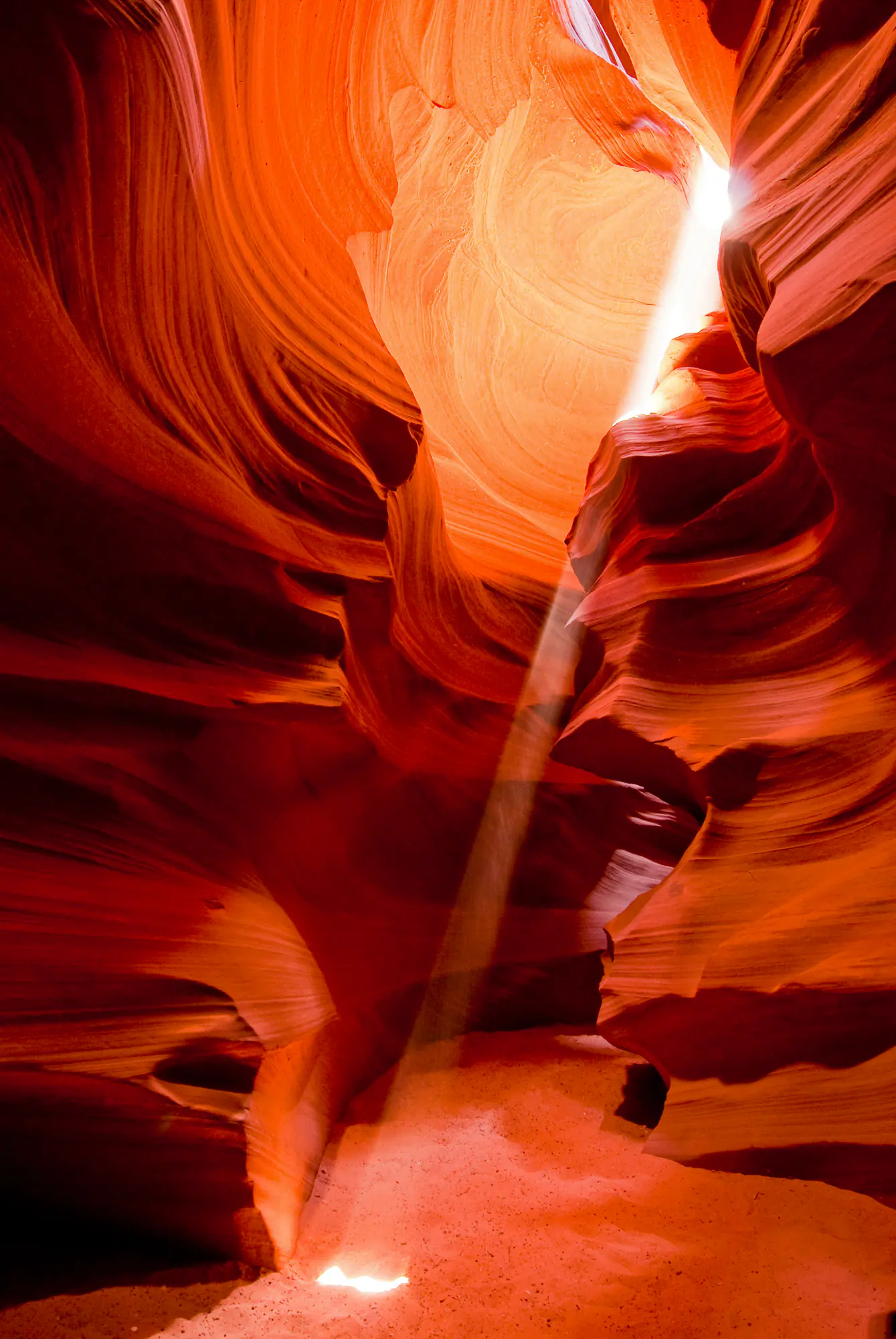
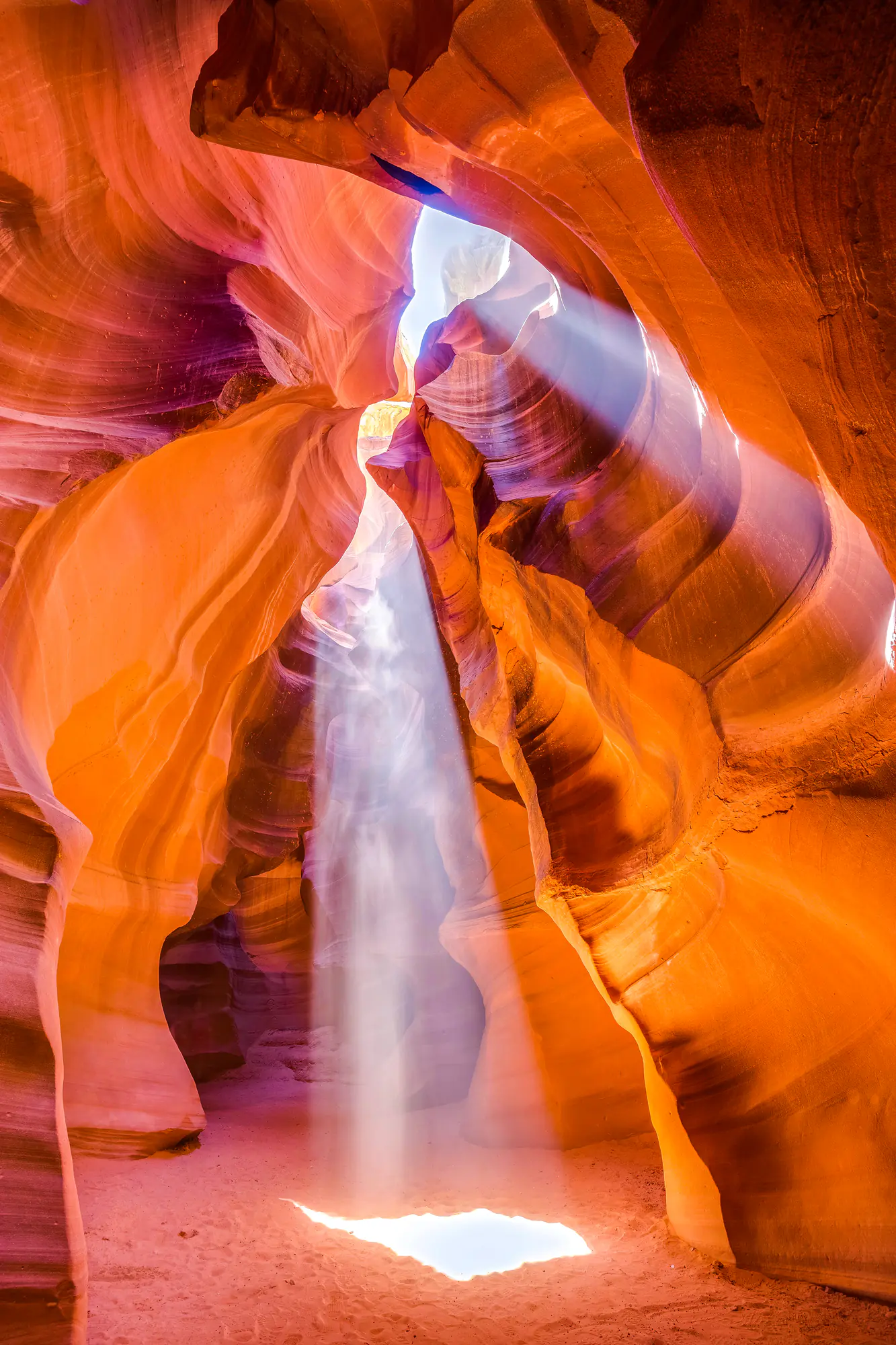
It is between 11 a.m. and 1 p.m., around the summer solstice, that the canyon reveals its most famous wonder. Through the narrow cracks that pierce the plateau above, the sun at its zenith sends columns of golden light plunging vertically to the ground, lifting every grain of sandstone dust into a shimmering mist as they pass. These light beams, which have become the quintessential symbols of the Navajo Canyon and are among the most iconic photographic subjects in the world, last only a few fleeting minutes, yet they transform the space into a scene that is both intimate and theatrical, where the striking contrasts between shadow and light seem more akin to painting than to geology.
You emerge from Upper Antelope Canyon in a state that’s hard to describe : something between wonder and a sense of fulfillment. Time seems to stretch out strangely there : an hour spent in those corridors feels like both a few minutes and an eternity. The memory retains for a long time the imprint of these fluid forms, these shifting colors, this light that seemed to fall from the sky like a gift. This is not simply just another beautiful landscape : it is a sensory and almost spiritual experience, one that leaves everyone with the deep conviction of having touched upon something infinitely greater than oneself.