 EN
EN DE
DE FR
FR ES
ES NL
NL PT
PT JA
JA KO
KO ZH
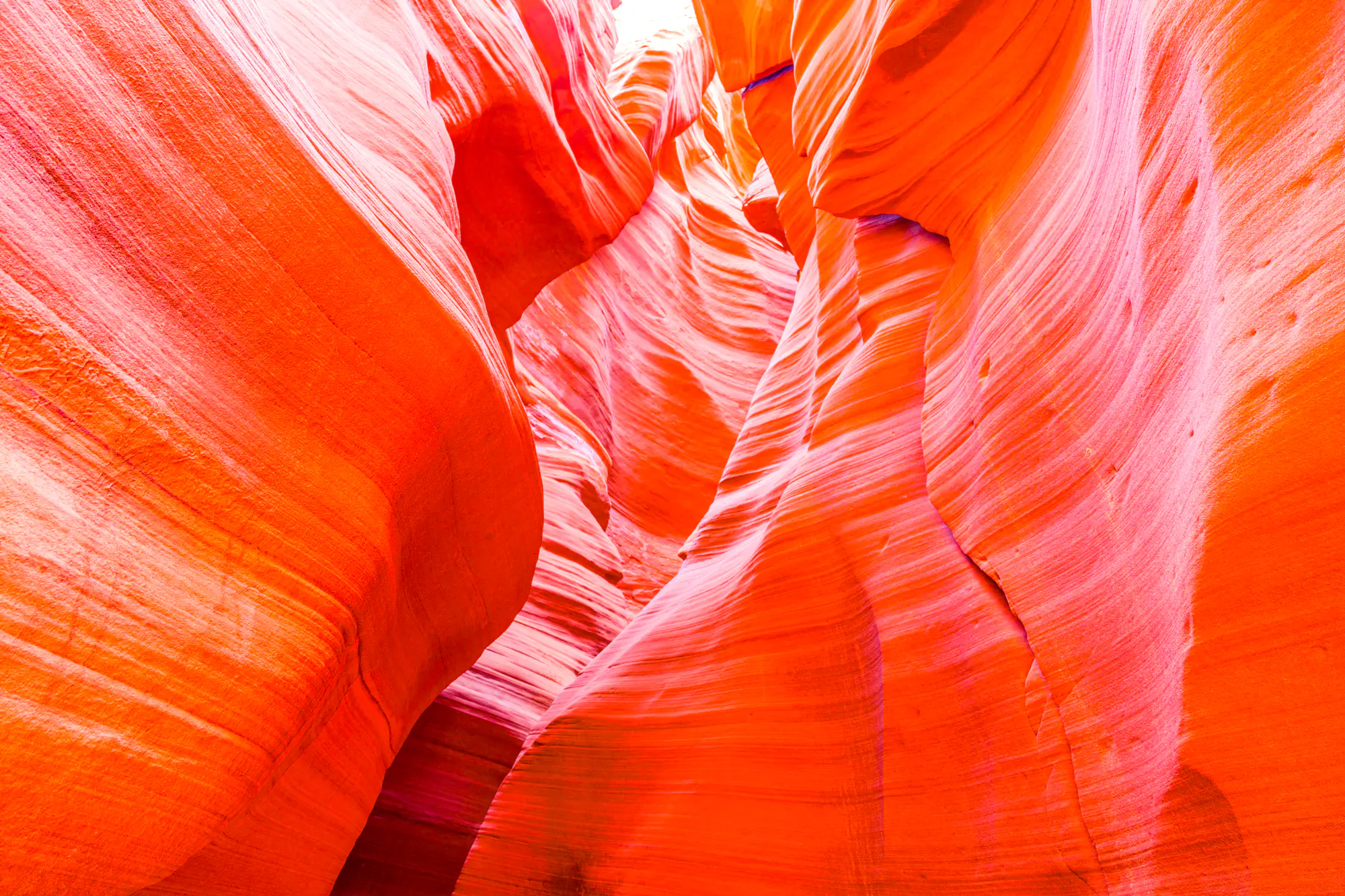
ZHLess crowded than its famous neighbors, Upper Antelope Canyon and Lower Antelope Canyon, Antelope Canyon X offers an experience that is just as spellbinding—if not more intimate. Nestled in Navajo lands on the outskirts of Page, this sandstone canyon—carved by millennia of wind erosion and flash floods—reveals two natural fissures that intersect in the shape of an "X" : it is precisely this unique configuration that gave it its name. Far from the large groups that swarm neighboring sites, Antelope Canyon X attracts those seeking to experience the magic of the filtering light and undulating walls without having to fight for the best photo.
Location
Antelope Canyon X is located a few miles east of the town of Page, Arizona, on the Navajo Nation’s land.
GPS Coordinates : 36.798827,-111.338111
Visiting conditions
Access to Antelope Canyon X is strictly regulated and is available exclusively through guided tours led by Navajo guides certified by the Navajo Nation. Far beyond simply ensuring your safety, these guardians of the canyon share a wealth of knowledge: the formation of the Navajo sandstone waves through wind and water erosion over millions of years, the legends and oral traditions of their people, and how to interpret the shifting light throughout the seasons and times of day. Their intimate knowledge of the area will guide you to the precise angles and moments when the low-angle light sets the walls ablaze with shades of ochre, coral, and gold—compositions impossible to find on your own.
There is an admission fee to Antelope Canyon X. The fee includes a permit to access Navajo lands, of which the canyon is an integral part. Given the site’s growing popularity, booking tickets online in advance is absolutely essential, particularly from March through October, when visitor numbers peak. Visiting slots are limited to preserve the site, and it’s not uncommon for availability to sell out several weeks, or even months, in advance. Don’t let a lack of planning deprive you of one of the most enchanting landscapes in the American Southwest.
The tour of Antelope Canyon X begins at the tour operator’s office, located along AZ98 and easily accessible by car (GPS : 36.819987,-111.30822). There, the guides will welcome you, verify your reservations, and brief you before heading into the canyon. Plan to arrive a few minutes before the time indicated on your ticket, as groups depart on the dot. As with Upper Antelope Canyon, the Antelope Canyon X tour requires a 2-mile drive in an all-terrain vehicle along a dirt road to reach the canyon entrance. Don’t worry: this transfer is included in the tour. Simply hop aboard the tour operator’s 4x4, and your guide will drive you to Antelope Canyon X.
The entire experience lasts about 90 minutes on average. You’ll spend roughly an hour inside the canyon—plenty of time to soak in the beauty of the lighting and rock formations. The rest of the time is spent traveling by 4x4 from the starting point to the canyon entrance, a short adventure in itself through the desert.
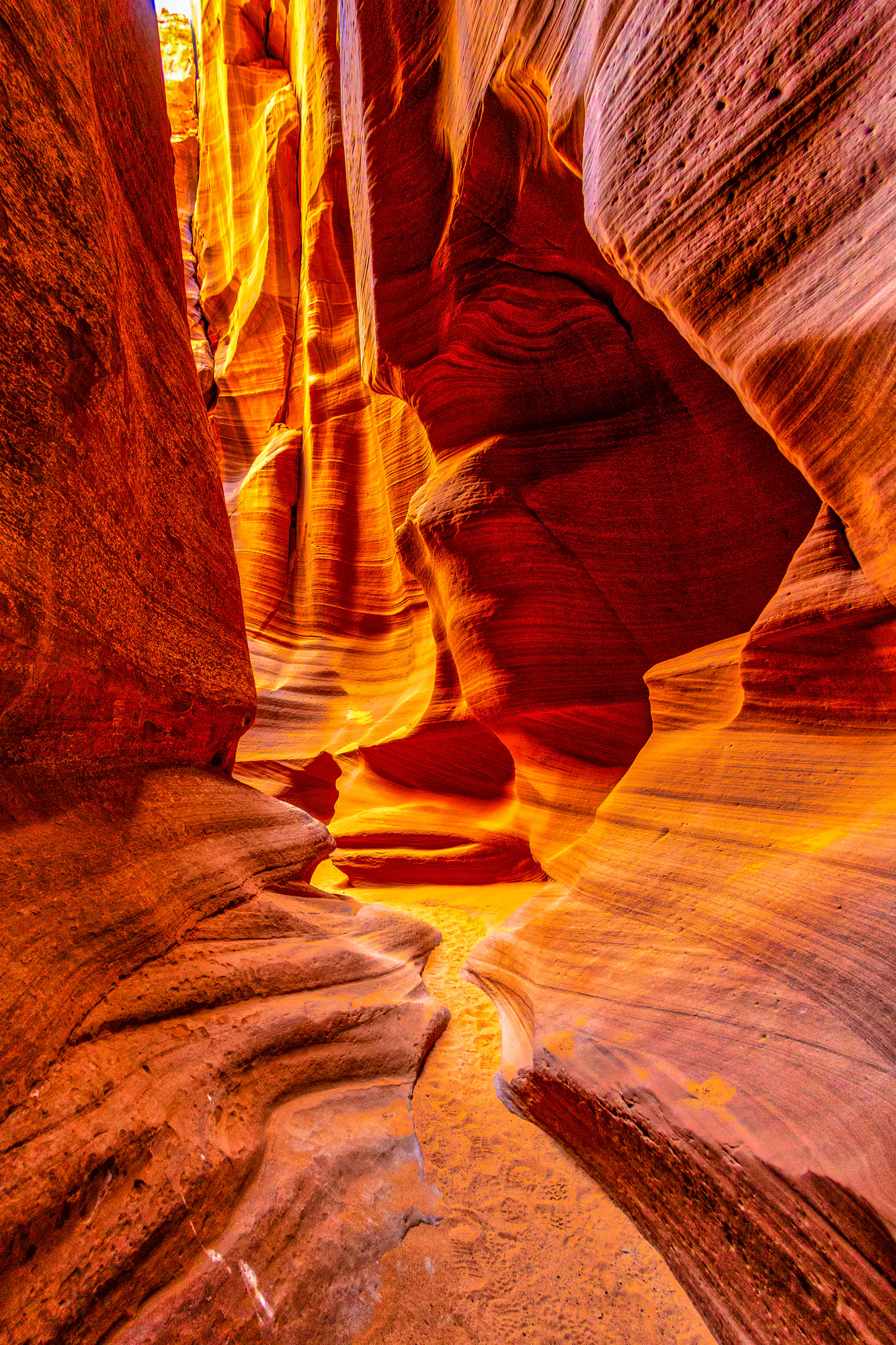
Once you arrive at the site, you’ll descend into the canyon via a paved path featuring several steps and access ramps. The canyon trail stretches for about 300 meters through a maze of passages carved by water over thousands of years. The walk takes place on sandy, relatively flat ground, making the tour accessible to most visitors, including children. Throughout the route, natural light plays off the orange sandstone walls, creating spectacular visual effects that vary depending on the time of day and the season.
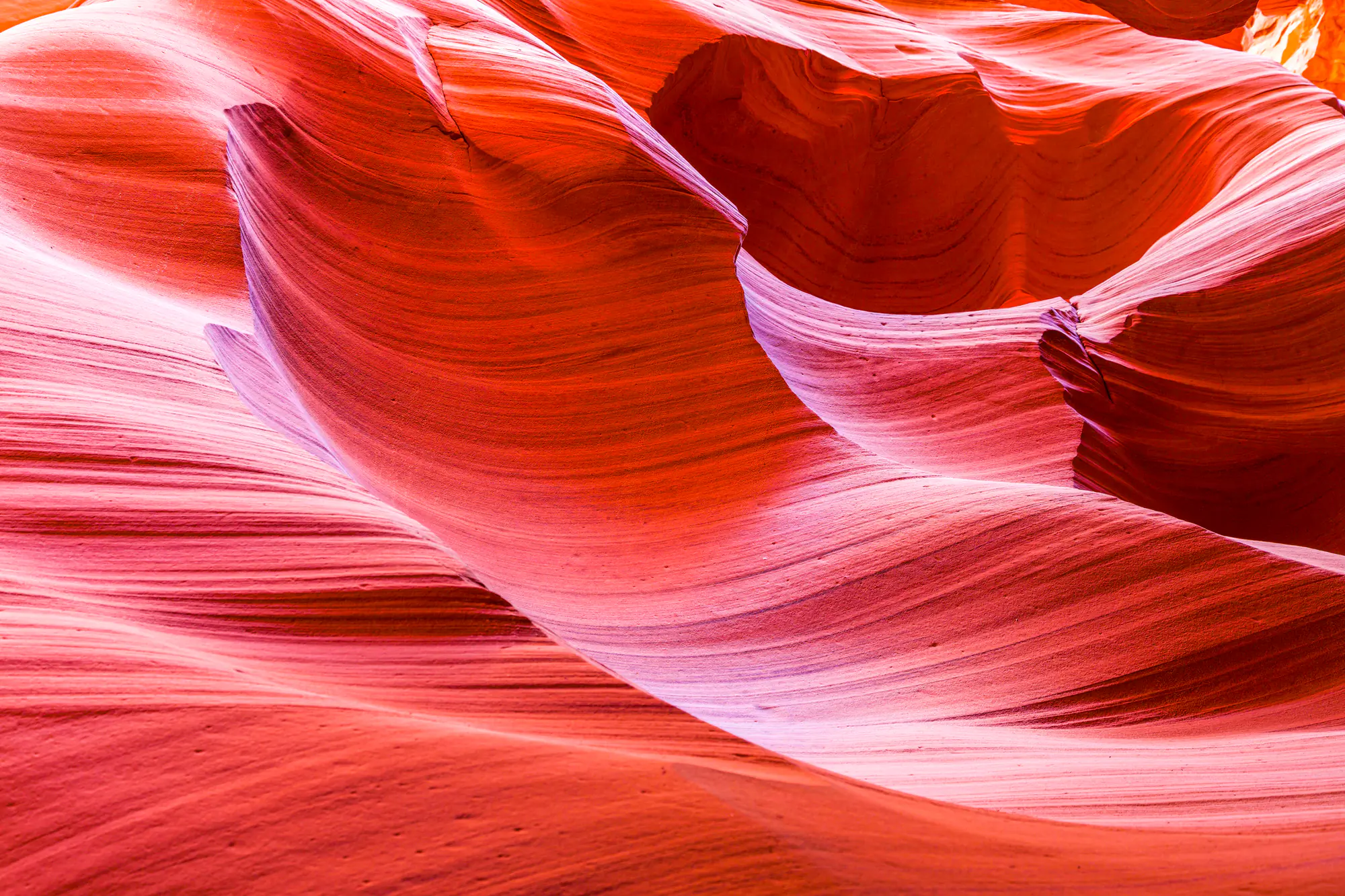
Discovering Antelope Canyon X
Stepping into Antelope Canyon X is like crossing the threshold into a world that water and wind have spent millennia sculpting—a mineral sanctuary where light and silence meet in a perpetual dance. From the very first steps on the sandy ground, an atmosphere of reverence envelops the visitor. Unlike Upper Antelope Canyon, which is crowded with tourists, Antelope Canyon X welcomes visitors with an almost spiritual tranquility. The air is cool, slightly dusty, and filled with the distinctive scent of Navajo sandstone that has been heated and then cooled. You immediately sense that you are in an extraordinary place.
The canyon owes its existence to the relentless erosion of seasonal floods. For centuries, torrential rainwater has poured into the cracks of the Navajo Sandstone, a 190-million-year-old sedimentary rock formed from fossilized desert dunes, carving, polishing, and refining every curve with a precision no human tool could ever replicate. This is not a canyon carved with an axe but with a paintbrush. The double-forked shape resembling an "X" that gives it its name is not merely decorative: it creates two distinct paths of entry, each offering its own play of light and shadow, its own secret nooks to discover.
At eye level, the sandstone walls reveal a stunning complexity. Their surface is not smooth: it undulates, hollows out, and swells into petrified waves that still seem to be in motion. The sedimentary layers can be read like the pages of a geological book: horizontal strata interrupted by diagonals, swirls that evoke smoke, deep furrows left by ancient streams. In places, the rock features natural cavities, small dark hollows that accentuate the relief and give the walls an almost organic texture, reminiscent of tree bark or animal skin. If you place your hand on these walls, an instinctive gesture, so inviting is their beauty, you feel beneath your fingers a slightly grainy surface, almost soft, like fine velvet. The material is both solid and fragile. These walls, which have withstood millennia of erosion, would nevertheless crumble under too much pressure. They inspire both respect and wonder.
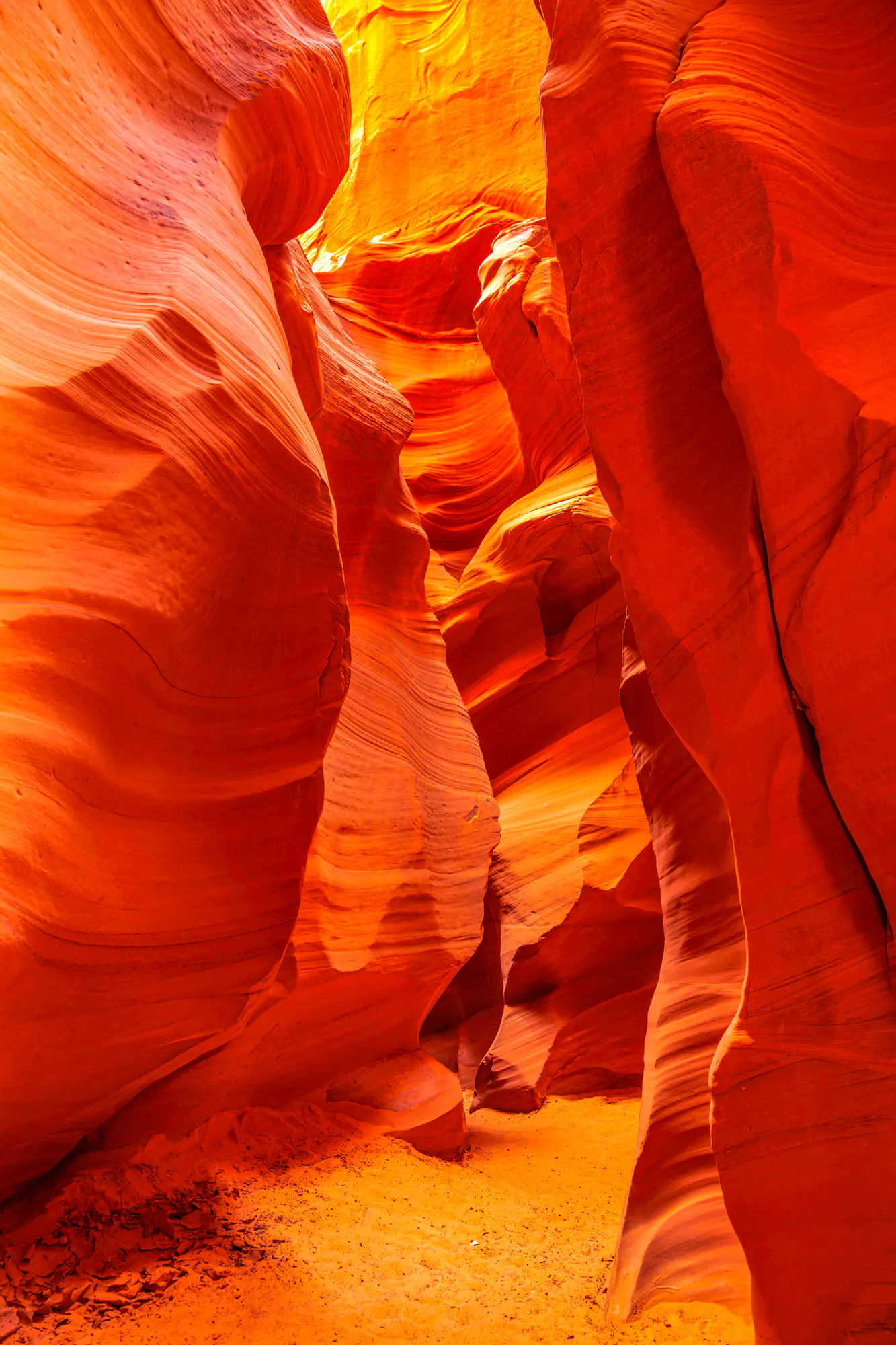
The true magic of Antelope Canyon X lies in its color palette, as rich and ever-changing as that of an Impressionist painting. The Navajo sandstone contains iron oxides that give it an extraordinary range of hues, depending on the light. In areas directly exposed to sunlight, the walls blaze with a deep, almost incandescent orange-red that evokes the embers of a dying fire. In the shade, the same walls shift toward golden ochres, warm terracottas, and caramel browns. But it is the intermediate zones, where the light skims the rock without striking it directly, that reveal the most unexpected and moving hues : soft, almost pinkish peaches, luminous apricots, and sometimes, in the hollows of certain crevices, surprising shades of lavender and pale violet. These mauve reflections, which seem impossible in a stone canyon, appear when light reflected off an orange wall indirectly illuminates a surface in shadow: a phenomenon of reflected coloration that transforms the geology into abstract art. It takes just a few steps, a slight shift in angle, for the entire scene to reconfigure itself. The canyon never shows the same face twice.
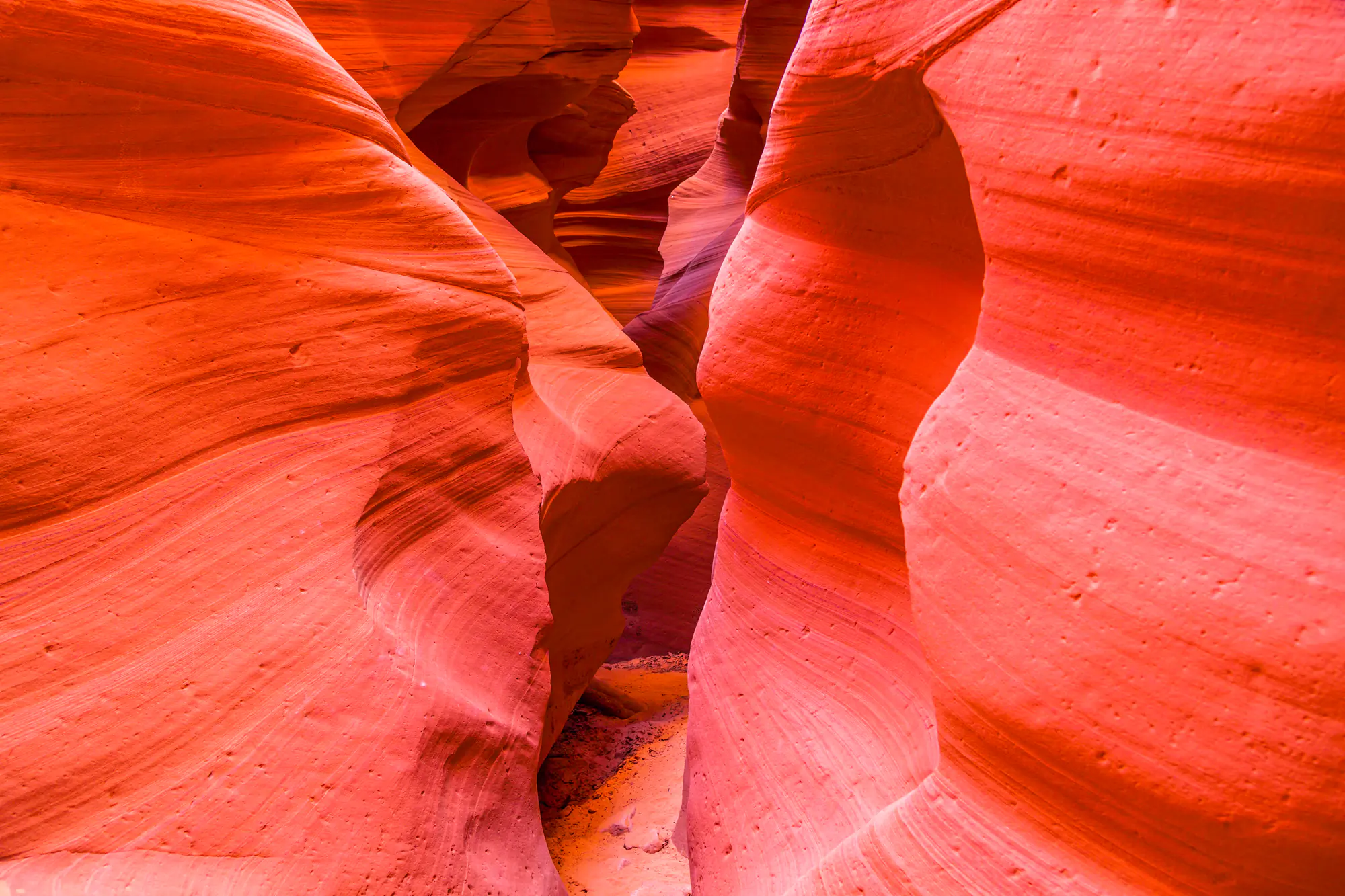
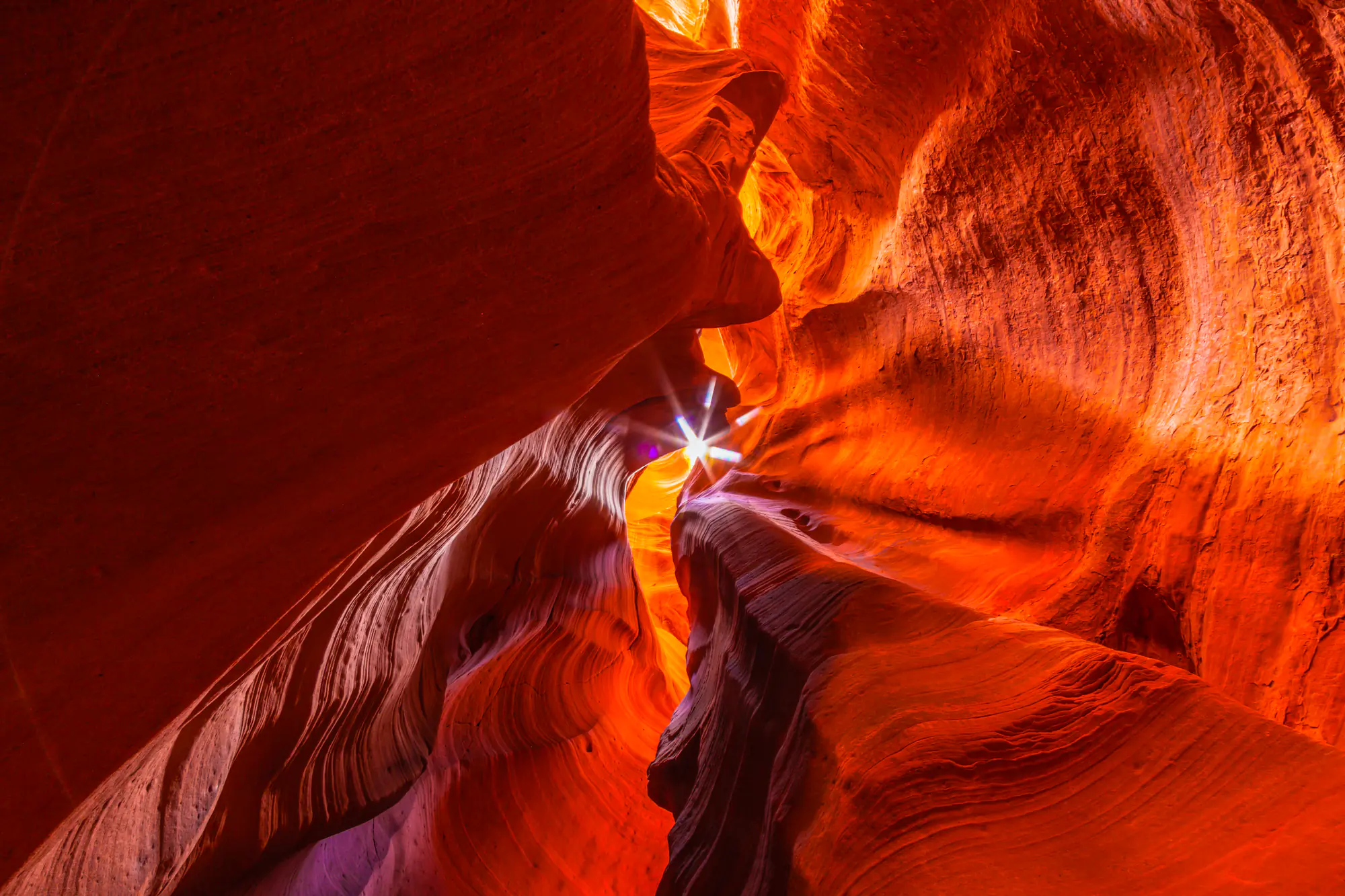
While the colors are dazzling, it is the light, or rather, the interplay between light and shadow, that constitutes the very soul of Antelope Canyon X. The narrow fissures that crisscross the rocky ceiling allow only a sliver of sky to penetrate. This filtered light then descends vertically, dividing the interior space into alternating columns of brightness and darkness. In the late morning and early afternoon, when the sun reaches a favorable angle, these beams of light literally materialize in the air: laden with suspended particles of sand and dust, they become visible as columns of solid light, immaterial pillars that seem to support the rocky vault. Admittedly, these rays are more subtle than in Upper Antelope Canyon, where the famous beams have become the region’s photographic emblem. But at Antelope Canyon X, their subtlety makes them all the more precious. They appear unexpectedly around a bend, suddenly illuminating a corner of the wall that was shrouded in shadow just a moment before, revealing a texture, a color, a shape that had gone unnoticed. Observing these transitions—from shadow to light, from red to purple, from silence to dazzling brightness—requires a kind of patience and attention that transforms the visit into a meditation.
Water has carved the walls not only on the surface but throughout their volume, creating three-dimensional forms of astonishing ingenuity. Looking up at the ceiling, one discovers pointed arches, ribs reminiscent of Gothic cathedrals, and spirals that bring to mind seashells. Some passages widen into spacious alcoves where several visitors can stand side by side, their gaze lost in the undulations of the stone. Others narrow to the point of embracing you, forcing you to move sideways, your shoulders brushing against two walls that seem to want to come together. Figurative shapes emerge here and there, shaped by the imagination: a petrified wave about to break, a profile carved into the sandstone, the fold of a fabric suspended in time. These natural pareidolias—this human tendency to recognize familiar shapes in random patterns—work strikingly here, as if the canyon, in its long solitude, had sought to carve out presences to keep itself company.
What fundamentally sets Antelope Canyon X apart from its more famous neighbors is the quality of the silence and the opportunity for true contemplation. Less crowded and better preserved in its atmosphere, it offers the rare luxury of stopping, sitting on the cool sand, looking up at a sliver of blue sky framed by the red of the rock, and letting your gaze wander aimlessly. For photographers, it is an inexhaustible playground: the light changing from one minute to the next, the richness of textures, the depth of shadows, and the brilliance of the illuminated areas offer infinite compositions without the need to jostle for position.