 EN
EN DE
DE FR
FR ES
ES NL
NL PT
PT JA
JA KO
KO ZH
ZHDiscover the most beautiful slot canyons in the world
Explore the unique rock formations sculpted by time and water during an unforgettable adventure waiting for you in Page, Arizona.
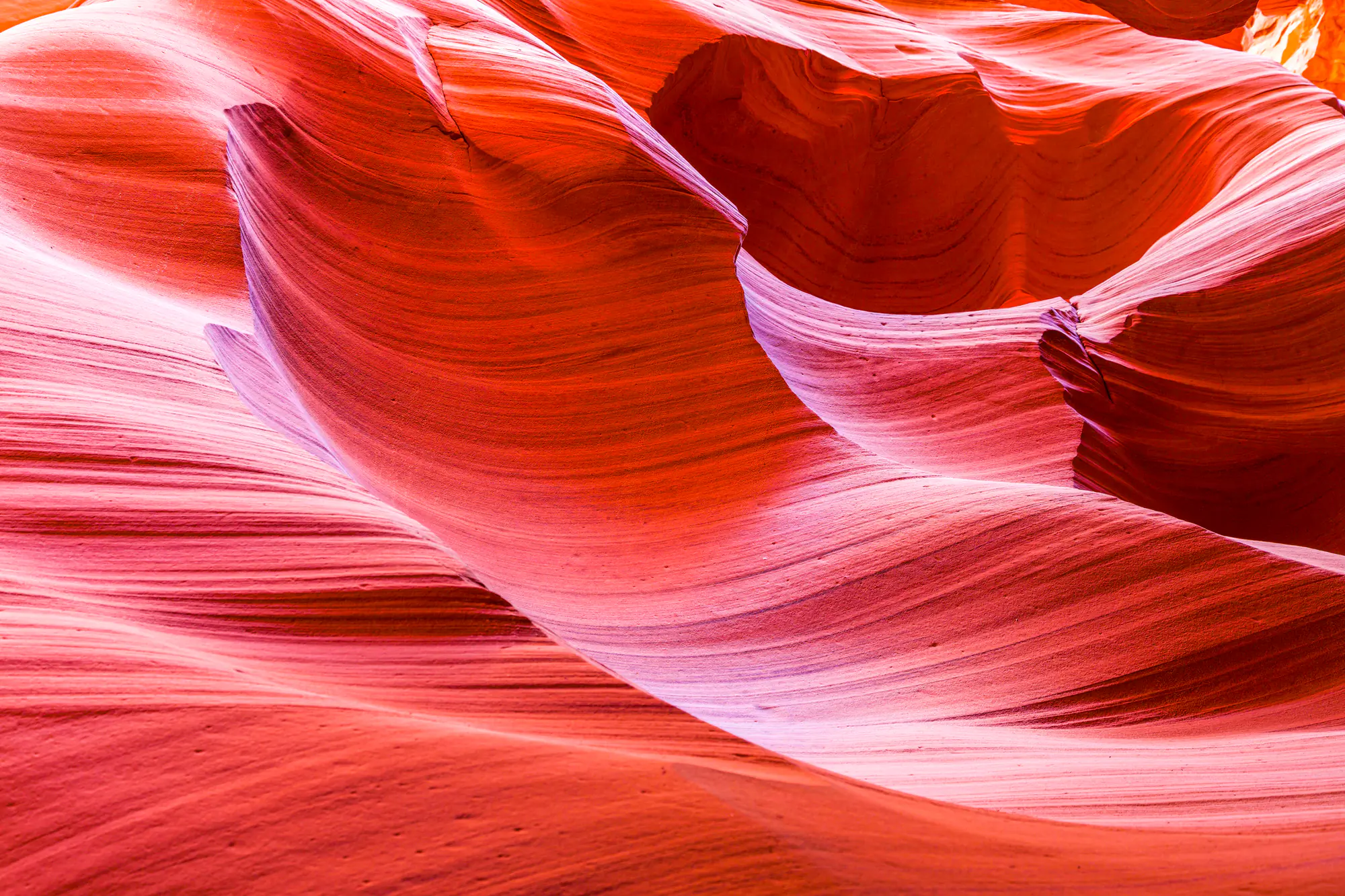
Set out to discover Antelope Canyon, a natural masterpiece where the light plays on red and orange sandstone walls, creating a magical and unique spectacle in the world.
The jewels of Antelope Canyon
Just a few kilometers from the small town of Page, Arizona, lie some of the most beautiful slot canyons in the world. Sculpted by millennia of erosion, these narrow canyons offer spectacular light plays, vibrant colors, and a unique experience for nature and photography lovers. Upper Antelope Canyon, Lower Antelope Canyon and Antelope Canyon X are three must-see gems that you absolutely must discover when you visit the Page area.
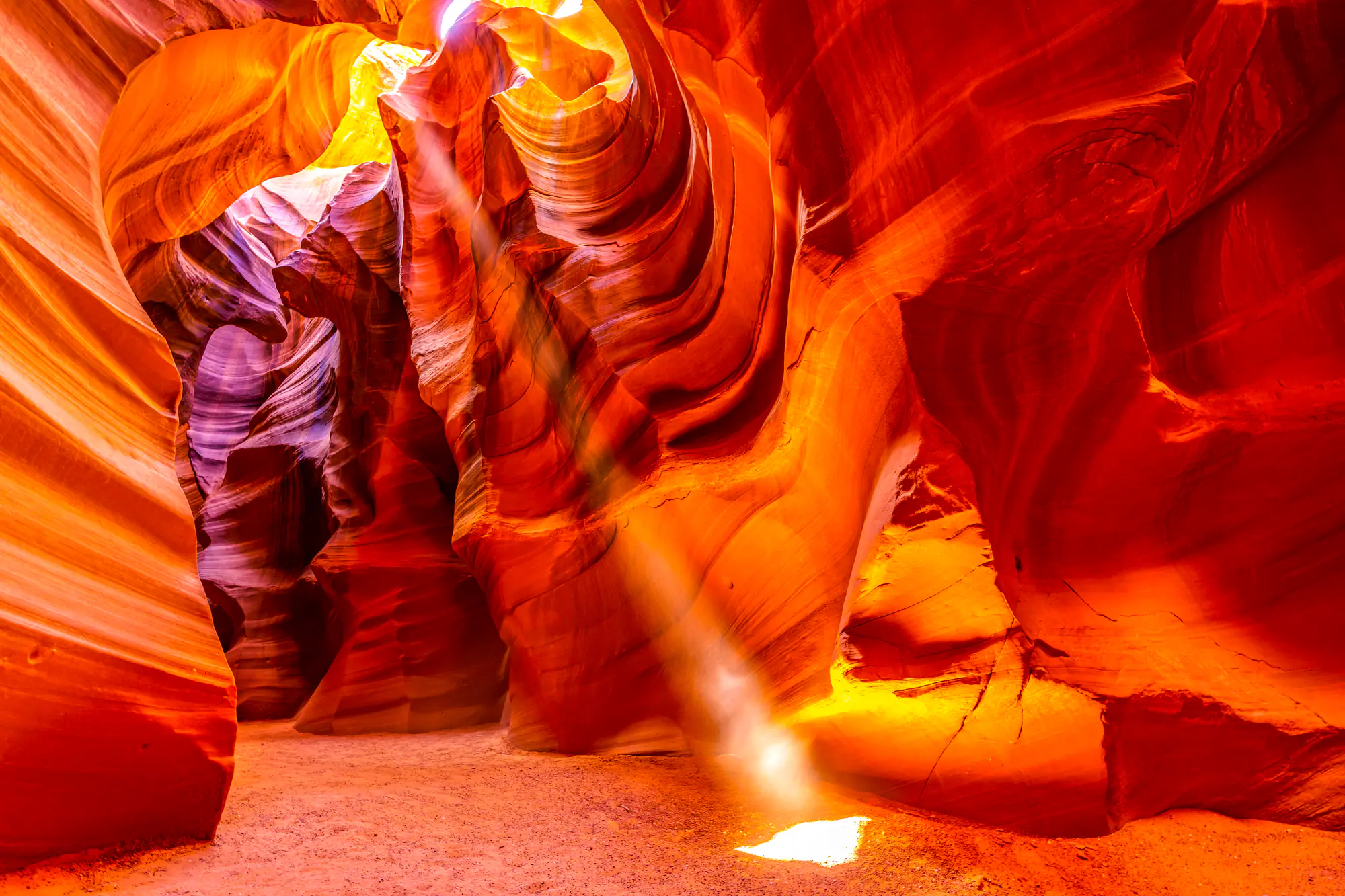
Upper Antelope Canyon
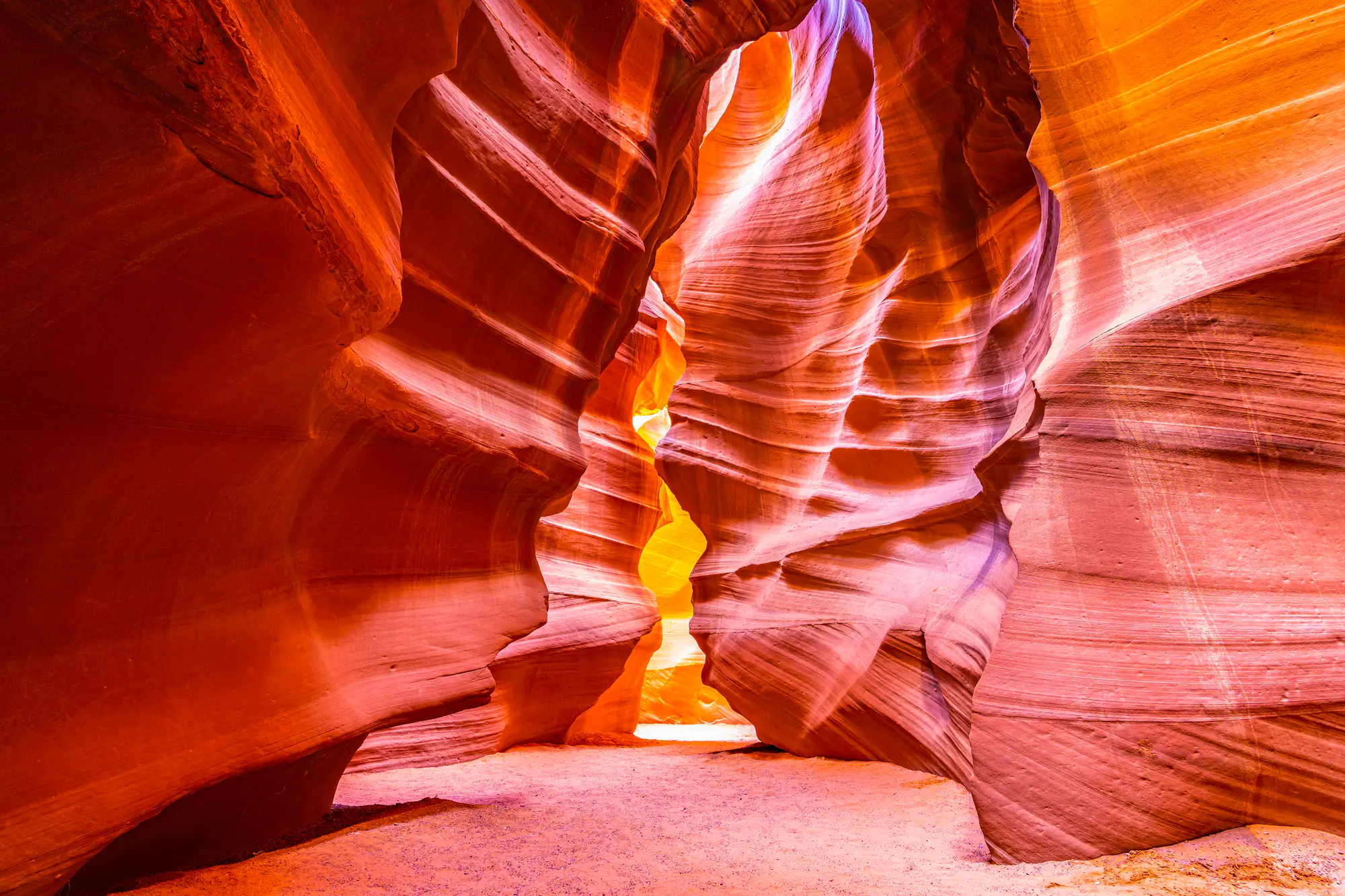
Dive into a feeric universe where the sun's rays pass through narrow walls to illuminate the golden sand. Upper Antelope Canyon, renowned for its spectacular light beams, is the most famous of Arizona's slot canyons.
Learn more Book your visit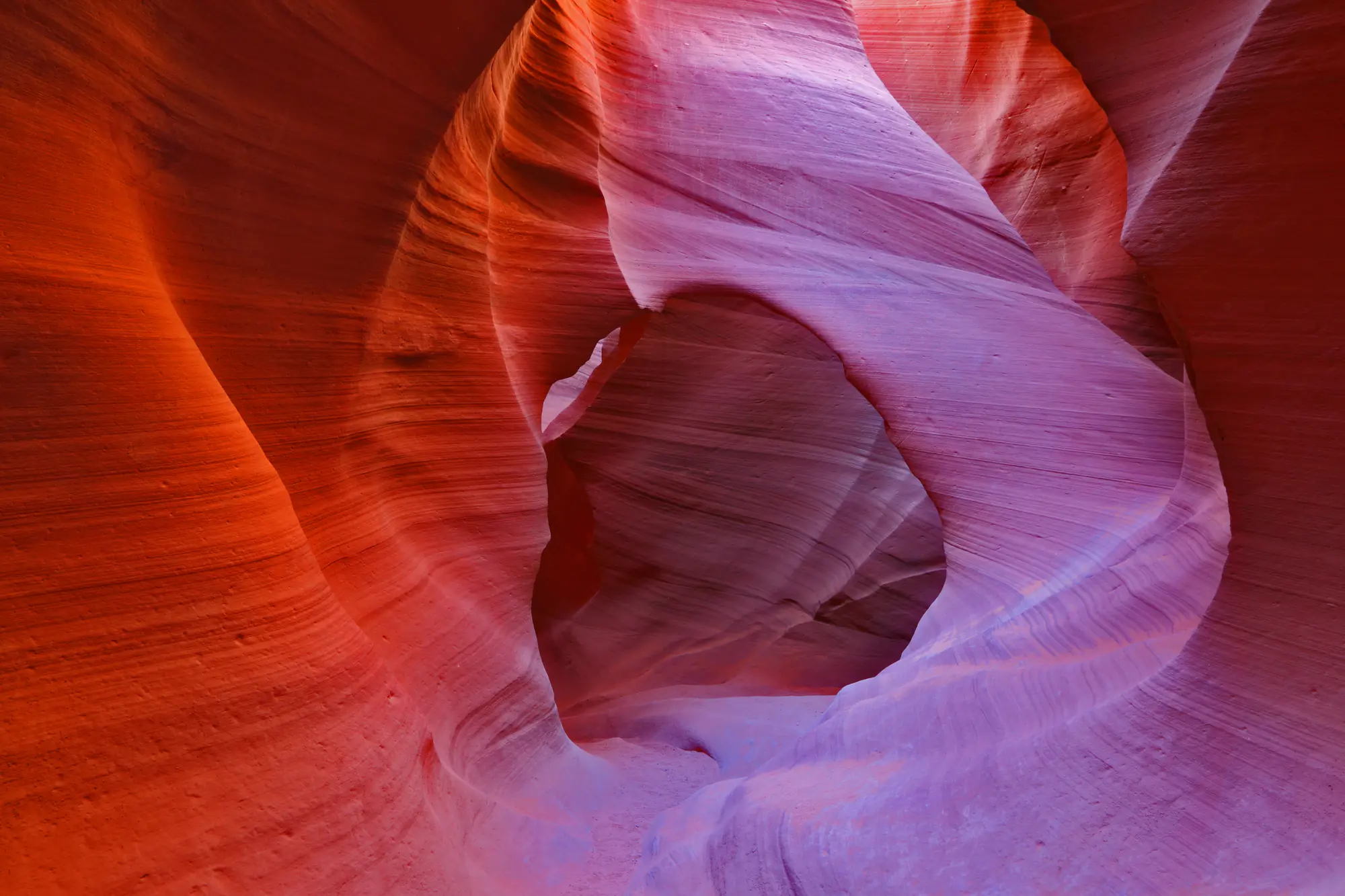
Lower Antelope Canyon
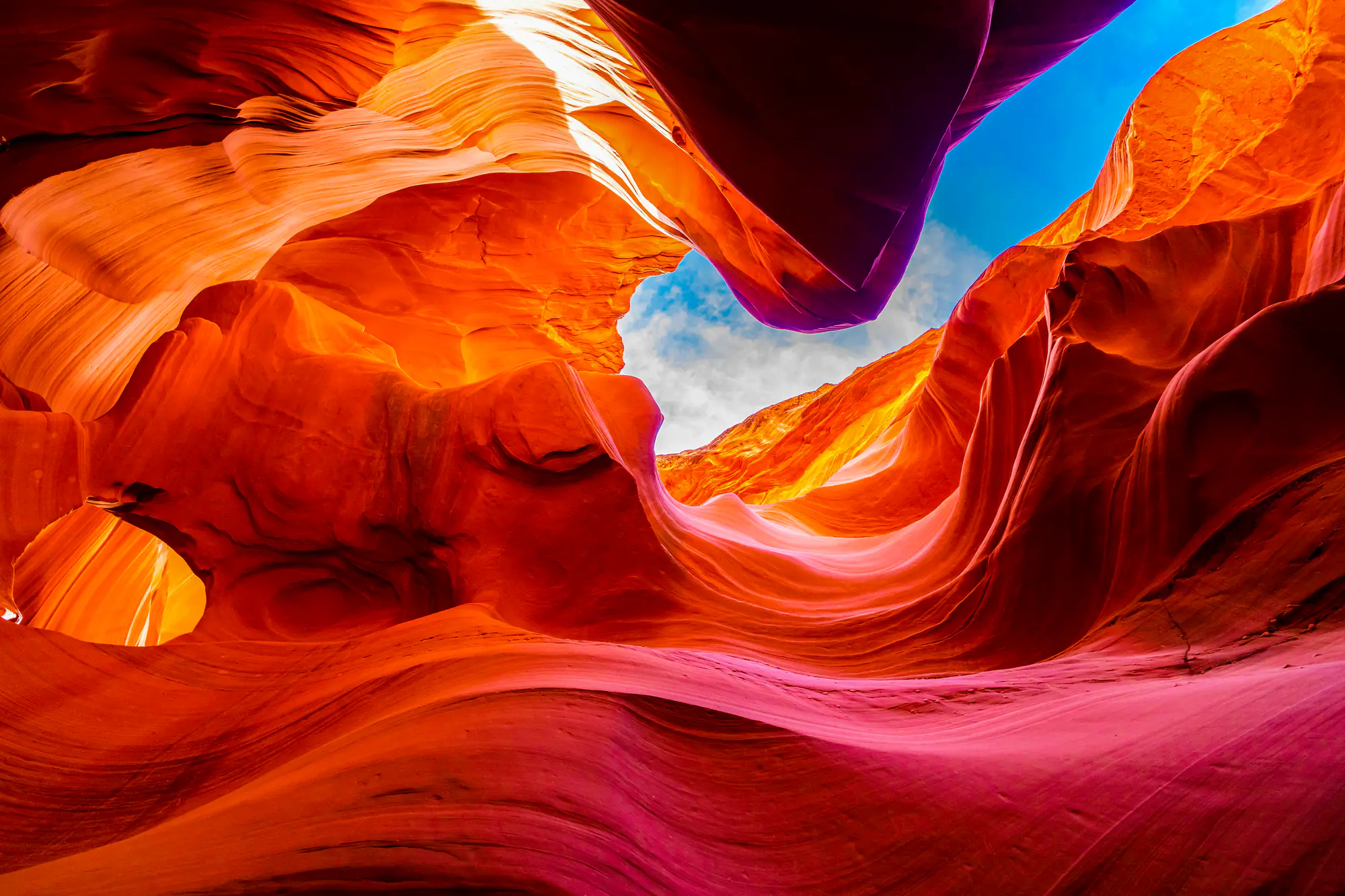
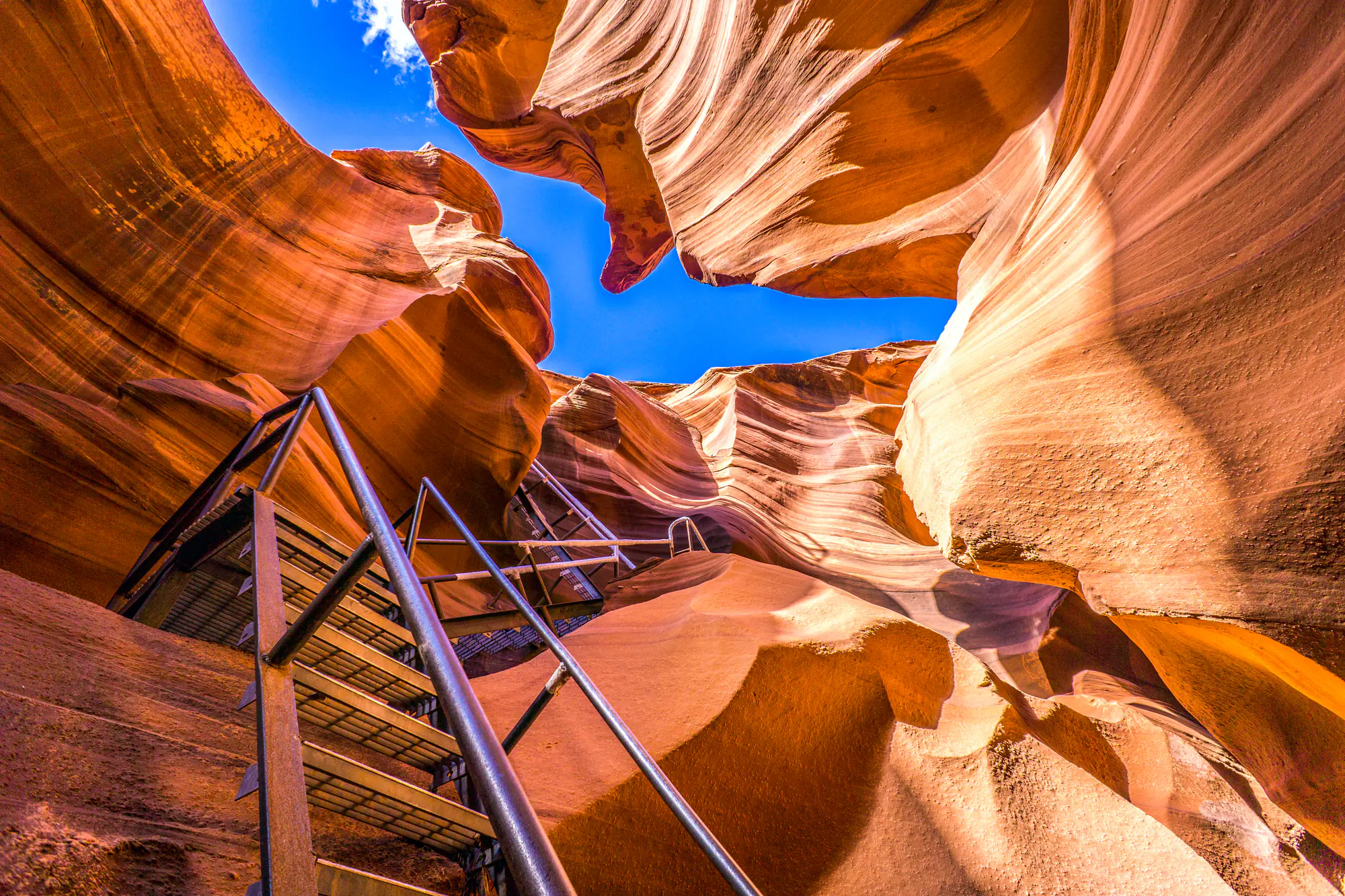
More winding and slightly more athletic, Lower Antelope Canyon invites you to descend metal stairs to explore its undulating curves and vibrant colors. A playful, immersive, spectacular, and unforgettable experience !
Learn more Book your visit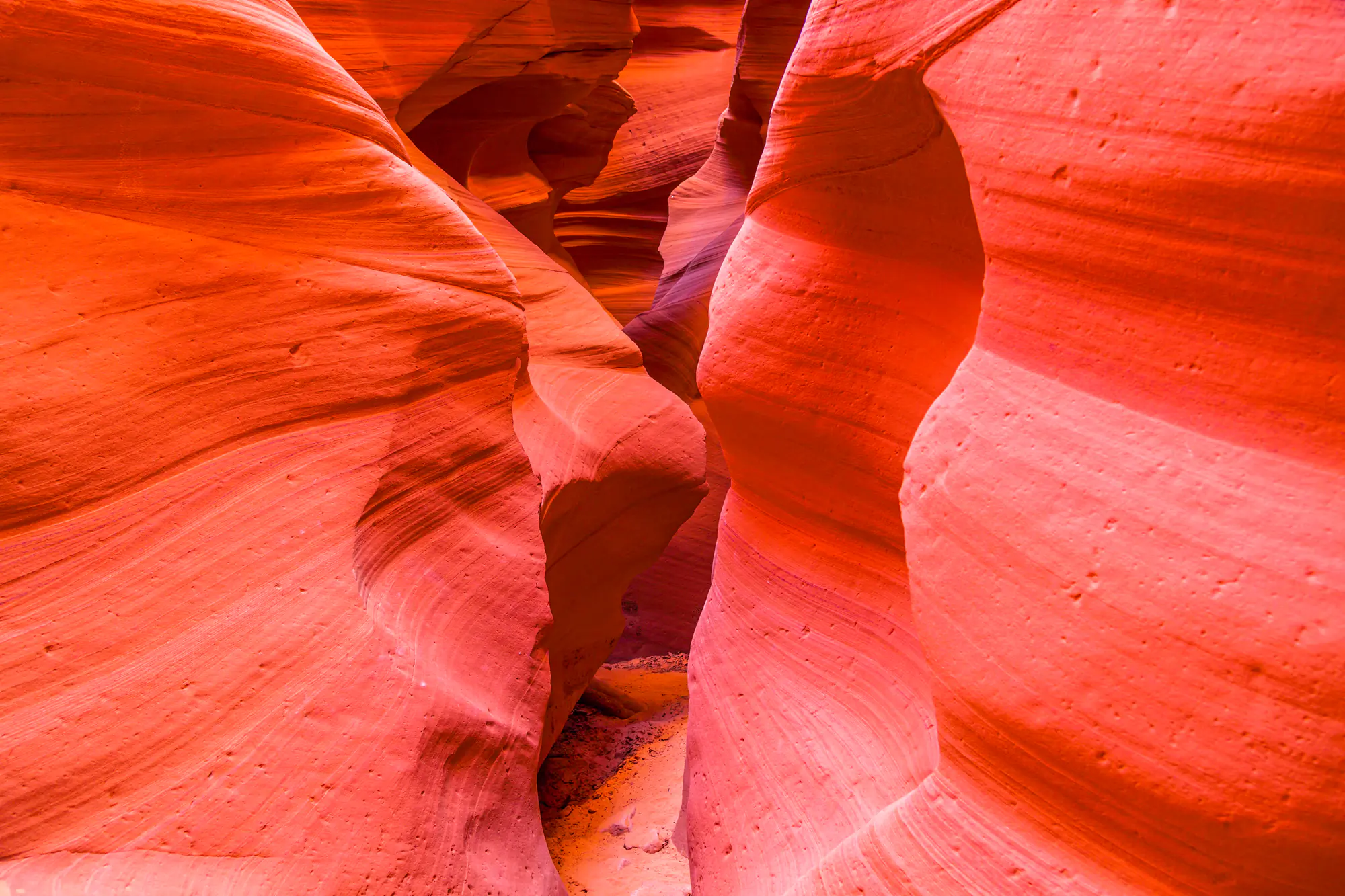
Antelope Canyon X
Less known and less frequented than its two big brothers, Antelope Canyon X offers a more intimate and wild atmosphere. Perfect for those seeking tranquility and unique photographic perspectives, this canyon will surprise you with its raw beauty.
Learn more Book your visitPrepare your visit
You cannot visit Antelope Canyon by yourself. Access is only and necessarily through guided tours organized by authorized Navajo operators. This is due to the fragility of the site, its cultural significance for the Navajo people, and for safety reasons (risk of flash floods).
We recommend booking your visit well in advance, especially during the high season.
✅ What to absolutely bring :
Water
Water is absolutely essential, especially in the summer : the arid, desert climate of northern Arizona can quickly turn your visit into an ordeal if you aren’t properly hydrated. Be sure to bring at least one liter per person in a water bottle or small, easy-to-carry container, especially since there are no water sources available on-site during the tour.
Hat/Cap
A wide-brimmed hat or a well-fitting cap is an essential item you shouldn’t overlook : while waiting before the tour, during the drive to the canyon, and when you’re outside at both the entrance and exit, shade is scarce and the Arizona sun beats down mercilessly. Only inside the canyon does it offer natural shelter. Everywhere else, you’ll be fully exposed, with a real risk of sunburn and heatstroke. In the desert, this accessory, as simple as it may seem, can make all the difference.
Sunscreen
The Arizona sun is intense, and even though part of the tour takes place in the shade of the canyon walls, you will be exposed to direct sunlight while waiting for the tour to begin, during vehicle transfers, and whenever you are outside the site—often with no shade to protect you. Apply a high-SPF sunscreen generously to your face, arms, and neck.
Closed shoes
The canyon floor is sandy and uneven, with staircases and narrow passages in some places; therefore, closed-toe, comfortable shoes are essential. They will protect you from the fine sand that gets everywhere, while ensuring a stable and comfortable walk.
Sunglasses
A good pair of sunglasses is essential, not so much inside the canyon (where the light, filtered by the sandstone walls, remains soft and enveloping) but especially for the time spent outside : the drive to the canyon entrance, and especially the exit from the canyon, which can be particularly striking. After spending several dozen minutes in the soothing twilight of the gorge, the return to the natural light of the desert is jarring : the sun, reflected by the pale sand and arid ground, is immediately blinding, and unprotected eyes struggle to adjust to this excess of brightness.
Camera/Smartphone
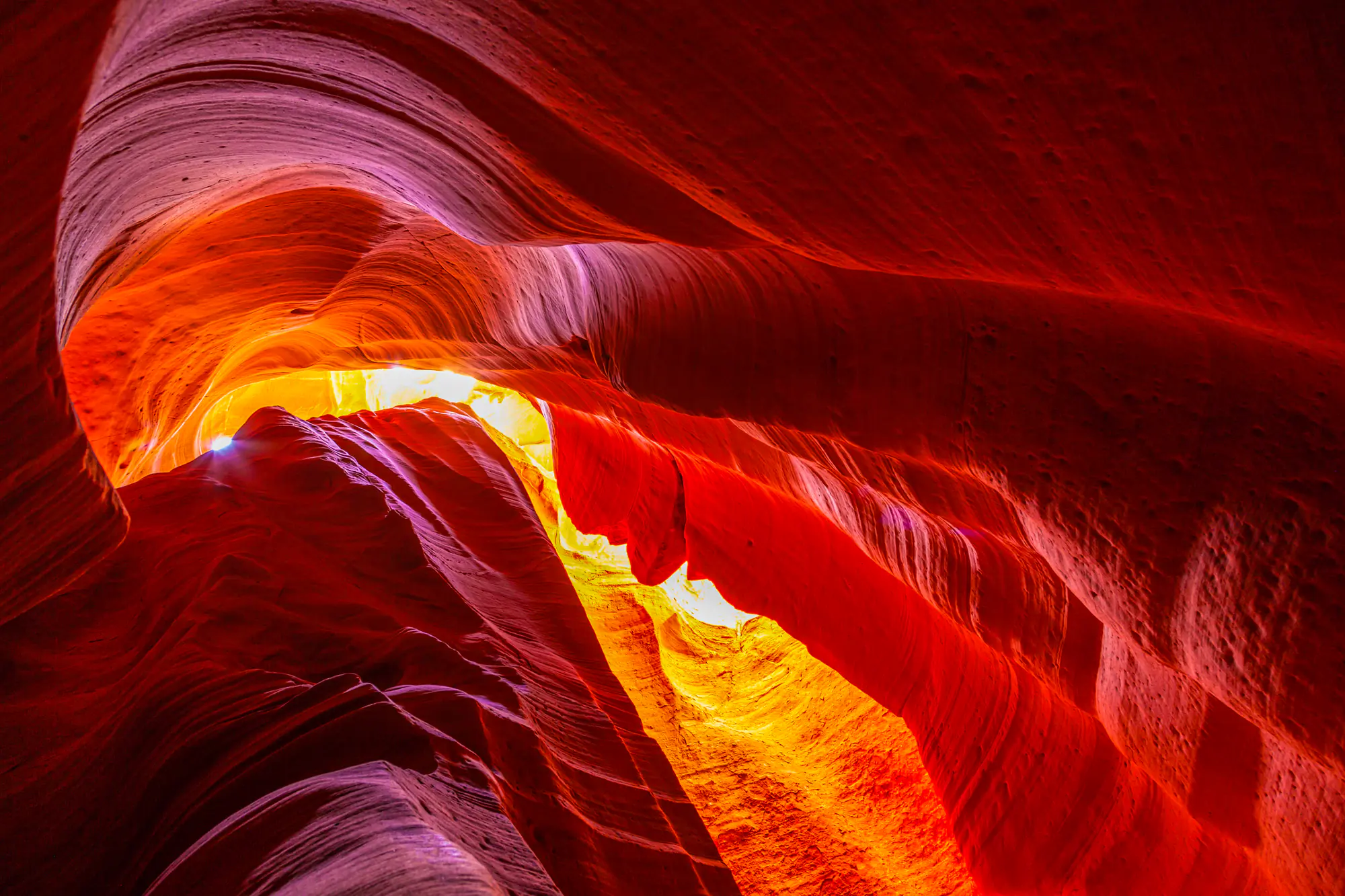
Make sure your electronic devices are fully charged and have plenty of storage space, as Antelope Canyon is one of the most photogenic sites in the United States : its surreal play of light and undulating walls in shades of gold and orange will inspire you to take photos to your heart’s content. There’s just one rule to follow : turn off the flash, which is not only unnecessary in this setting but also counterproductive : it’s precisely in the natural, soft light filtering through the cracks in the ceiling that the canyon’s magic lies.
❌ What not to bring :
Backpacks
Backpacks are prohibited in the canyon, as in these winding, narrow sandstone passages, they could damage the walls—sculpted by thousands of years of erosion—and hinder the smooth flow of traffic.
Tripods
Tripods are strictly prohibited inside the canyon, as they slow down the group’s progress and risk damaging the sandstone walls, whose sculpted surface is remarkably fragile.
Selfie sticks
Selfie sticks are strictly prohibited in the canyon, as they pose a safety hazard in these narrow spaces and may interfere with other visitors' experience.
Time zone
Although Antelope Canyon is located on Navajo Nation territory, which observes daylight saving time, all tours of Antelope Canyon follow Arizona (Page) time, meaning there is no time change in the summer. This rule was established to avoid confusion for visitors. Regardless of the season, Antelope Canyon is always on the same time as Page (Mountain Standard Time).
How are slot canyons formed ?
The slot canyons were carved into Navajo sandstone, a sedimentary rock formed about 190 million years ago through the gradual petrification of vast Jurassic sand dunes. In fact, the characteristic undulations of these ancient fossilized dunes are still visible on the canyon walls. It was then the patient work of water that shaped these corridors : over the millennia, torrential rains generated flash floods that rushed with colossal force into the smallest cracks in the rock, eroding, polishing, and gradually widening it to sculpt these sinuous forms with hypnotic curves. This process is still at work today, imperceptibly reshaping the walls where the light plays differently at every hour of the day.
Photo Gallery